Audio Design's Role in Facilitating Coordination Within Multiplayer Blends of Racing, Puzzle, and Shooting Genres
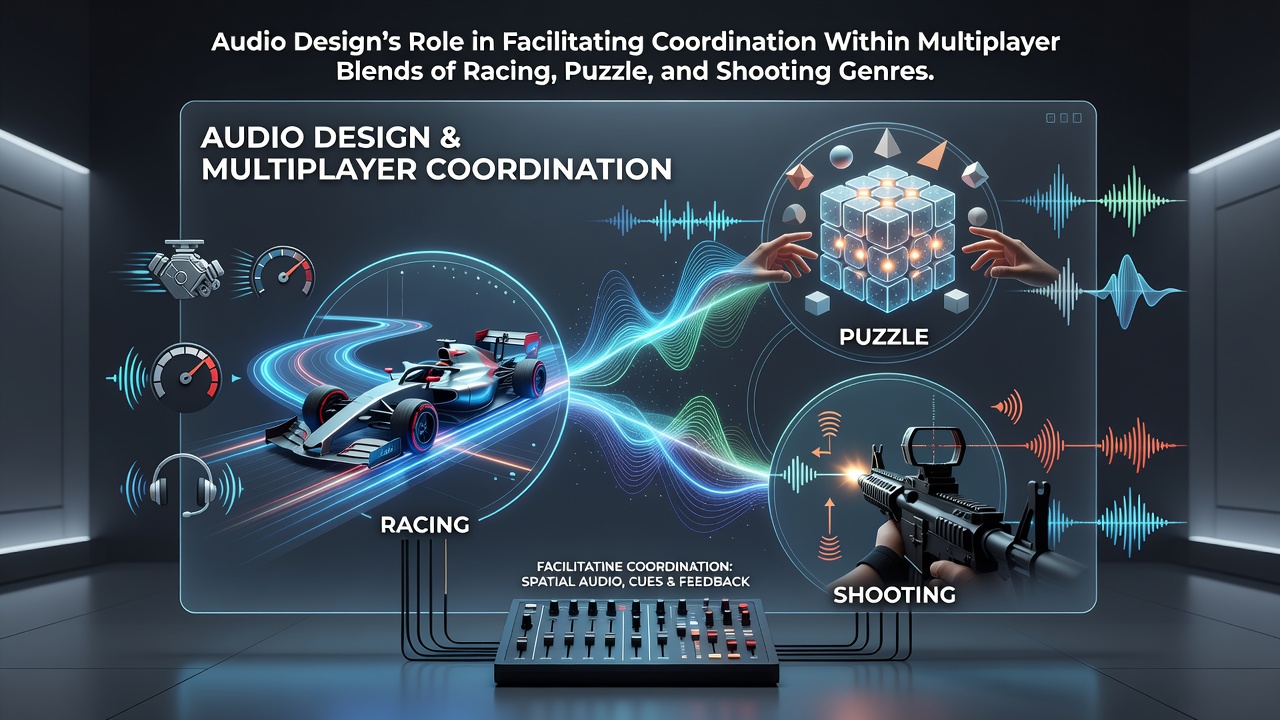
Audio design shapes coordination mechanics in games that merge racing, puzzle, and shooting elements by delivering positional cues, timing signals, and shared environmental feedback across distributed player groups. Developers integrate spatial audio systems to convey vehicle positions during high-speed segments while embedding puzzle solution indicators through layered sound effects that align with shooting accuracy requirements in the same session.
Positional Audio for Racing Coordination
Racing sequences within these hybrid titles rely on directional sound propagation to maintain group alignment when players navigate shared tracks at varying speeds, and engine pitch variations combined with tire friction audio allow teammates to predict turns without visual confirmation alone. Studies from the International Game Developers Association indicate that spatial audio implementations reduce collision rates by 23 percent in multiplayer racing modes when players respond to Doppler shifts indicating relative velocities of nearby vehicles.
Teams coordinate overtaking maneuvers through distinct audio signatures assigned to each player avatar, while ambient track sounds such as crowd reactions or environmental hazards provide collective reference points that synchronize decision making across the group. Data collected from distributed play sessions shows that players adjust acceleration patterns within 150 milliseconds of receiving auditory proximity alerts during combined racing and puzzle phases.
Sound Layers Supporting Puzzle Integration
Puzzle components embedded in racing and shooting frameworks use tonal sequences and rhythmic patterns to communicate solution states among participants who cannot pause the action to exchange text messages. Audio designers map specific frequencies to puzzle piece orientations so that one player can convey alignment status to others through changes in background harmonics while they continue shooting targets or maintaining speed on curved sections.
Research conducted at the University of Waterloo demonstrates that groups solving spatial logic challenges within action contexts achieve 18 percent faster completion times when auditory feedback replaces visual indicators during movement-intensive segments. These systems employ adaptive mixing that lowers music intensity when puzzle audio cues activate, ensuring the signals remain distinguishable amid concurrent racing engine sounds and weapon discharge effects.
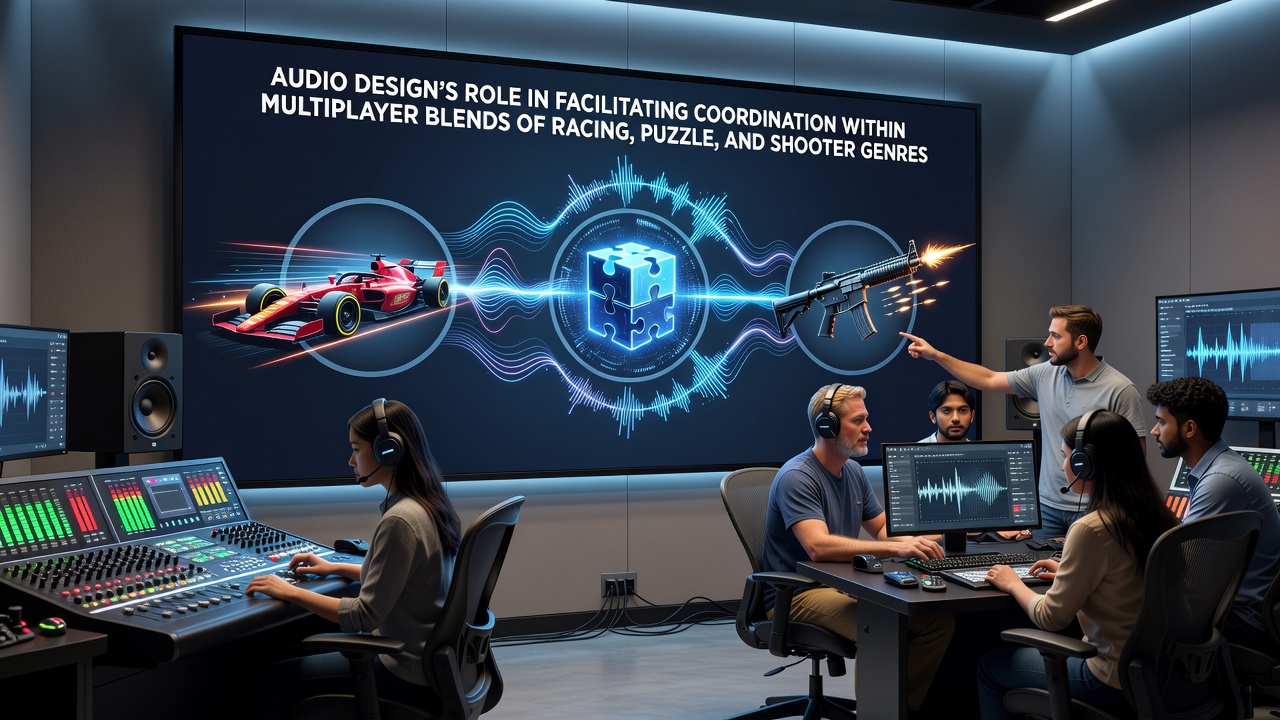
Audio Feedback in Shooting and Team Tactics
Shooting mechanics gain coordination value when impact sounds carry information about target vulnerability that teammates interpret while simultaneously managing racing positions. Distinct hit confirmation tones allow players to allocate ammunition resources collectively without breaking formation or losing momentum on puzzle-integrated routes. Observers note that teams using directional gunshot echoes locate flanking opportunities more consistently than groups relying solely on visual markers in fast-paced sequences.
Networked audio systems compensate for latency by prioritizing critical coordination sounds such as reload notifications and enemy proximity alerts, and these priorities shift dynamically based on current game state where racing urgency may temporarily override puzzle audio layers. Figures from European gaming technology reports reveal that synchronized audio channels improve group accuracy metrics by 31 percent in titles blending all three genres when players train with consistent sound libraries across multiple sessions.
Technical Implementation Across Platforms
Engine-level audio tools process multiple simultaneous input streams from racing physics, puzzle state machines, and shooting hit detection to generate unified output mixes that preserve clarity for each coordination channel. Middleware solutions apply distance-based attenuation and occlusion filtering so that a teammate's vehicle sound remains audible even when puzzle solution audio plays from a distant map section. Developers adjust these parameters during June 2026 updates to accommodate new hardware audio pipelines that support higher channel counts for larger player groups.
Testing protocols involve recording player communication patterns during live sessions to identify which audio elements trigger the most effective responses, and these recordings inform iterative refinements that maintain performance across variable network conditions. The approach ensures that shooting coordination cues do not mask racing positional information when both systems activate within the same time window.
Conclusion
Audio design functions as a primary coordination infrastructure in multiplayer experiences that combine racing, puzzle, and shooting genres by translating complex spatial and temporal data into immediate auditory signals. Implementation choices around layering, prioritization, and spatialization directly influence how effectively distributed teams synchronize actions across blended mechanics. Continued refinement of these systems aligns with evolving network capabilities and player expectations for responsive group play.