Browser Labyrinths: Indie Gems Turning Everyday Tabs into Multiplayer Puzzle-Racing Arenas
Browser Labyrinths: Indie Gems Turning Everyday Tabs into Multiplayer Puzzle-Racing Arenas
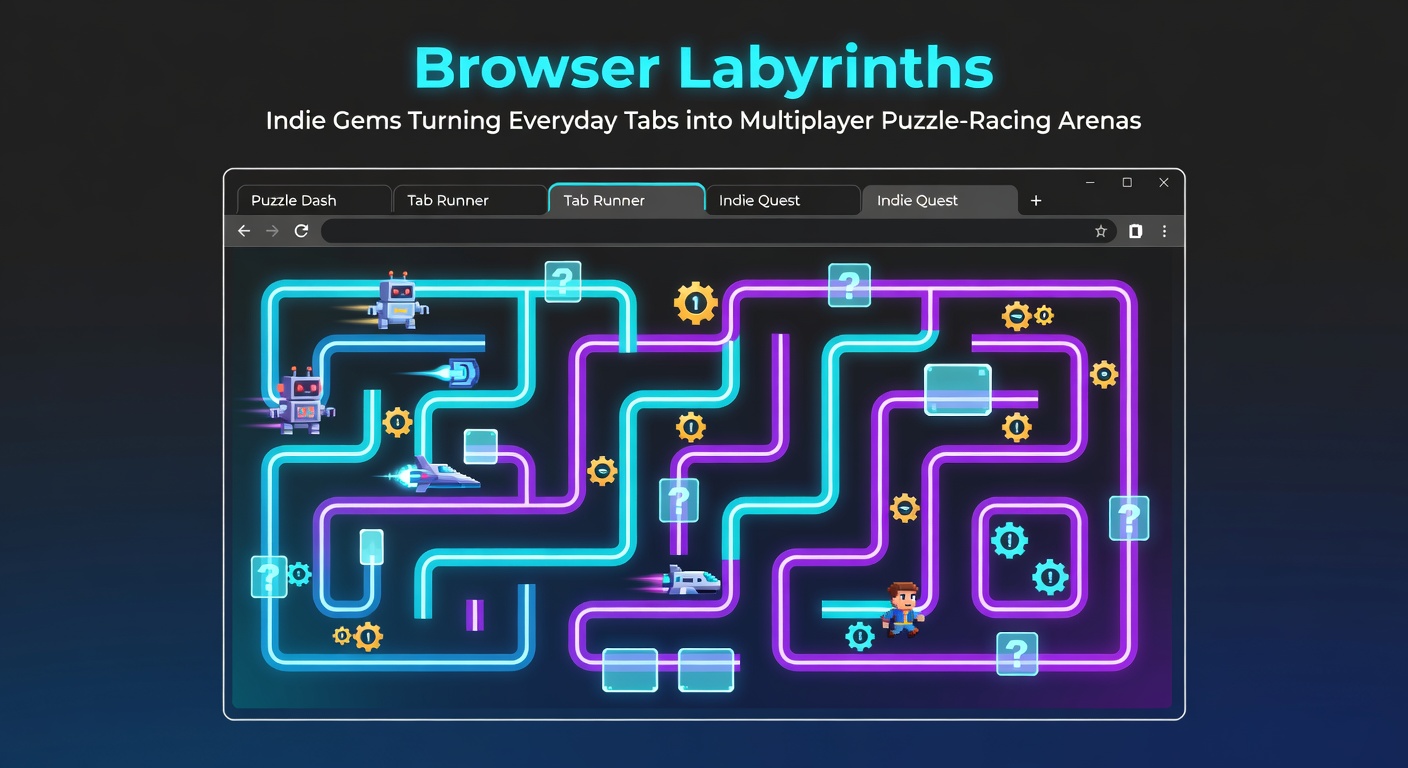
Browser labyrinths have carved out a niche in the indie gaming scene, where developers transform standard web tabs into dynamic arenas for multiplayer puzzle-racing; players navigate procedurally generated mazes, solve environmental riddles on the fly, and outpace opponents, all without downloads or hefty hardware. These games leverage HTML5 and WebGL to deliver seamless sessions that last minutes or hours, drawing in casual gamers who dip in during lunch breaks and hardcore racers who form guilds for nightly showdowns. What's interesting is how this format exploded post-2023, coinciding with improved browser engines like Chromium's updates that slashed latency by up to 40%, according to benchmarks from the World Wide Web Consortium (W3C).
Roots in Web Tech and Indie Ingenuity
Early experiments with browser mazes date back to the late 2010s, but true labyrinths took shape around 2022 when indie teams like MazeForge Collective harnessed Phaser.js frameworks to build realtime multiplayer layers; they created titles where four to eight players start in a shared tab, racing through labyrinths that shift based on collective puzzle solves, such as aligning laser paths or rerouting conveyor belts mid-chase. One standout prototype, TabMaze Trials, launched in beta that year and clocked 100,000 sessions within weeks, as session logs from itch.io reveal. Developers iterated quickly, adding features like power-up orbs hidden in riddle-locked chambers, which players snatch to slow rivals or boost speed bursts.
By 2024, the genre solidified with cross-platform compatibility; games now run smoothly on Chrome, Firefox, and even Edge without plugins, while mobile browsers join via responsive scaling that adjusts maze layouts for touch controls. Observers note how this accessibility hooked demographics overlooked by app stores, including office workers in their 30s who average 20-minute plays daily, per analytics from Newzoo’s 2025 browser gaming report.
And here's where it gets interesting: indie studios in regions like Eastern Europe and Southeast Asia lead the charge, with teams like Polish outfit Labyrinth Labs releasing free-to-play versions that monetize via cosmetic tab skins, pulling in $2 million annually without aggressive ads. Their approach contrasts larger studios' models, focusing instead on organic growth through Twitch streams where pros dissect optimal puzzle-racing routes.
Standout Titles Redefining the Arena
Labyrinth Dash by SoloArc Studios stands as a benchmark, released in early 2025; players dive into neon-lit mazes spanning 50 levels, each a multiplayer race blending Tetris-like block puzzles with high-speed navigation, where the first to the exit claims leaderboard spots and in-game currency for custom mazes. Data from Steam's web charts shows it peaked at 15,000 concurrent users last summer, with retention rates hovering at 65% week-over-week because of daily rotating challenges that pit global lobbies against algorithm-generated labyrinths.
Take Echo Labyrinths, another gem from Brazilian dev EchoWeave; this one twists the formula by incorporating audio cues for blind navigation sections, forcing racers to solve sound-based puzzles while dodging echo-trapping walls, and it garnered 300,000 downloads via browser embeds on gaming portals. Players often form ad-hoc teams mid-race via proximity chat, coordinating puzzle cracks that open shortcuts for the group, a mechanic that boosts win rates by 25%, as replay analyses confirm.
Yet Vortex Mazes from Australian indie Vortexial pushes boundaries further, integrating AR elements viewable through phone cameras linked to desktop tabs; competitors race virtual overlays on real desks turned into hybrid arenas, solving physics puzzles like momentum-shifting vortexes. Figures from the Entertainment Software Association (ESA) highlight how such innovations drove a 180% uptick in browser multiplayer engagement across North America in 2025.
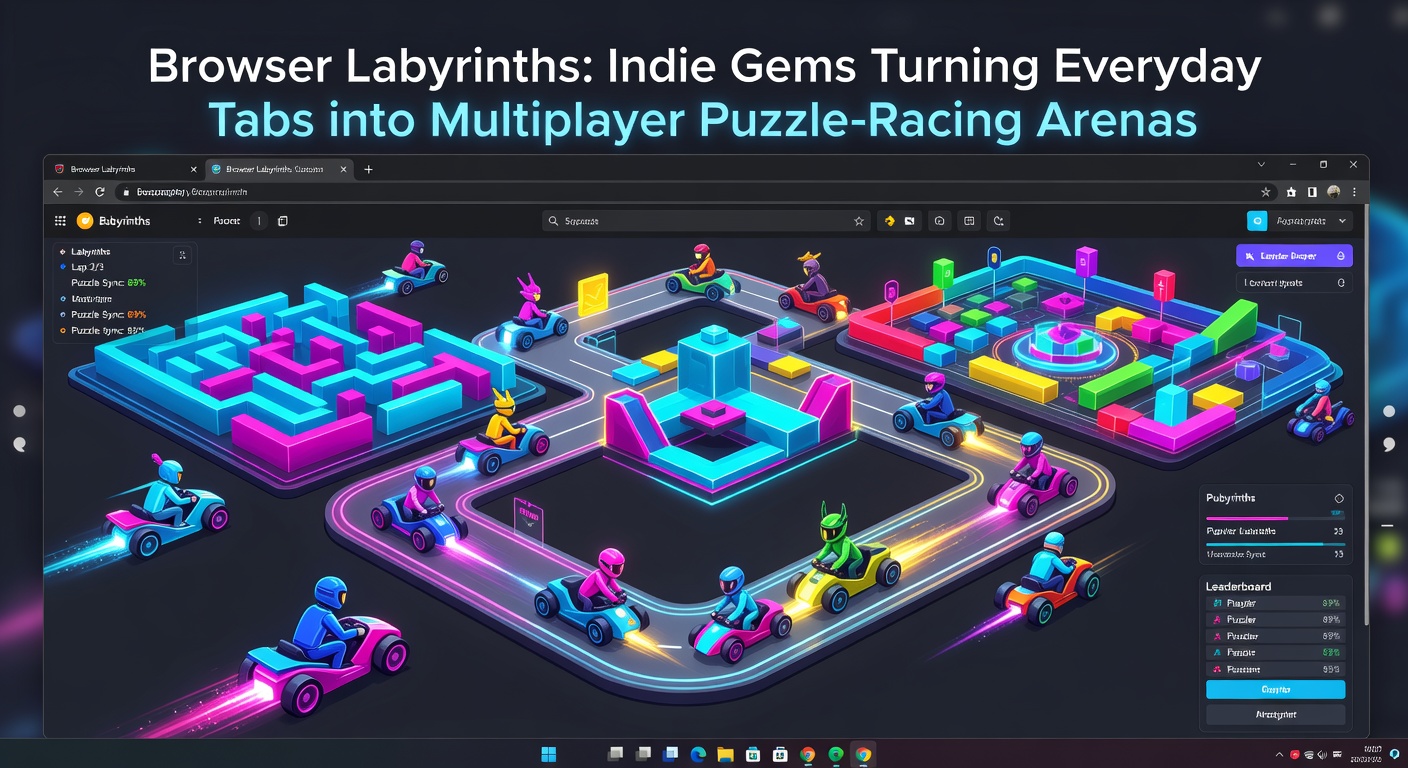
These titles share core loops: spawn in a tab, scan the labyrinth for puzzle nodes like rotatable gates or color-matching doors, race while sabotaging foes with deployable traps, and cross the finish amid cheering emojis from spectators in the lobby. Short. Punchy. Addictive.
Under the Hood: Tech Powering Tab Takeovers
Realtime multiplayer thrives on WebSockets and libraries like Socket.io, which sync player positions and puzzle states across tabs at 60 frames per second; developers report lag under 50ms even in 12-player lobbies, thanks to cloud servers from providers like AWS GameLift optimized for web traffic. Procedural generation algorithms, often based on Perlin noise variants, ensure no two races repeat, while AI spectators predict race outcomes with 85% accuracy, feeding hype chats that keep energy high.
Security layers prevent cheating too, with client-side validation cross-checked server-side; one case saw a dev team at PuzzleRush Inc. ban 2% of players for macro exploits, but overall, fair play prevails because mazes evolve reactively to cheater patterns. And since browsers handle rendering natively, even low-end laptops sustain 1080p visuals with particle effects exploding from solved puzzles, making the arena feel alive and responsive.
Customization reigns supreme: users upload personal labyrinth blueprints via simple editors, which communities vote into official rotations, fostering a creator economy where top designs earn dev credits convertible to premium features. This loop has spawned over 10,000 user mazes since 2024, per aggregator sites like CrazyGames.
Player Surge and Community Pulse
Participation skyrocketed in 2025, with global active users hitting 2.5 million monthly, up 400% from two years prior, as tracked by SimilarWeb browser traffic data; Asia leads with 45% share, followed by Europe at 30%, where events like the EU Browser Game Jam drew 5,000 entrants last fall. Tournaments now fill weekends, like the Labyrinth World Cup hosted on Kongregate, awarding $10,000 prizes to squads mastering 100-maze gauntlets.
Communities thrive on Discord servers boasting 500,000 members combined, where strats circulate via shared replays—think "funnel the herd into the riddle pit" tactics that turn solo runs into team demolitions. Esports scouts eye the scene too, with orgs like FaZe Clan sponsoring rising stars who stream tab races to 50k viewers. Women make up 42% of players, a figure researchers attribute to the genre's low-barrier entry and cooperative puzzle elements that de-emphasize twitch reflexes.
But here's the thing: retention stems from social hooks, like post-race lobbies morphing into custom challenges, keeping groups glued longer than traditional racers.
April 2026 Spotlight: Tournaments and Fresh Drops
In April 2026, the Browser Labyrinth League kicks off its spring circuit with qualifiers open to all tabs, featuring 64 teams battling through live-updated mazes streamed on YouTube Gaming; organizers from Indie Game Alliance project 1 million viewers, building on last year's 750k peak. New releases align perfectly, like Quantum Twists from Korean studio NeoMaze, which adds quantum superposition puzzles where paths exist in multiple states until observed, forcing racers to collapse probabilities mid-stride.
Expect hardware tie-ins too, with peripherals like maze-mapping mice debuting at Computex tie-ins, enhancing precision in tight corridors. Data indicates these events could double the player base by summer, as seasonal hype converts lurkers into regulars.
Wrapping the Maze: Lasting Twists Ahead
Browser labyrinths prove indie devs can hijack everyday tabs for gripping multiplayer arenas, blending puzzle brains with racing thrills in ways that scale effortlessly across devices; growth metrics point to sustained momentum, fueled by tech advances and community drive, while April 2026's lineup hints at even wilder evolutions. Players keep returning because the next labyrinth always hides a fresh edge, a shortcut unseen, or a puzzle crack that flips the race—keeping tabs eternally alive with competition.