Edge Server Reconciliation Protocols Altering Outcome Predictability in Lightweight Digital Group Activities

Edge server reconciliation protocols have emerged as a core component in systems that manage lightweight digital group activities, where multiple participants interact through shared digital environments, and these protocols work to align data states across distributed nodes while introducing measurable shifts in how outcomes become predictable. Researchers at institutions studying distributed computing note that reconciliation occurs when edge servers resolve discrepancies between local client states and the authoritative server view, often using techniques such as state merging, conflict resolution algorithms, and timestamp ordering to maintain consistency during concurrent actions.
Core Mechanisms of Edge Reconciliation
Lightweight digital group activities encompass scenarios like collaborative simulations, casual multiplayer sessions, and synchronized decision exercises that run on modest hardware yet require low-latency coordination, and edge servers positioned closer to participants reduce round-trip times compared with centralized cloud setups. Reconciliation protocols operate by periodically exchanging delta updates, applying deterministic rules to resolve divergent inputs, and propagating corrected states back to all nodes, which alters the window during which individual actions can influence final results. Data from network performance studies indicates that these steps compress the timeframe for unpredictable divergences, because conflicting commands receive arbitration within milliseconds rather than relying on full client-server round trips.
Observers tracking protocol implementations report that common approaches include last-writer-wins, priority-based merging, and vector-clock ordering, each carrying distinct effects on outcome variance, and tests conducted in controlled environments show measurable reductions in the entropy of final states when reconciliation runs at the edge instead of distant data centers. As of July 2026, several open-source libraries have incorporated adaptive reconciliation that adjusts resolution aggressiveness based on participant density and network jitter, producing tighter clustering of results across repeated trials.
Effects on Outcome Predictability
Predictability rises when reconciliation enforces stricter ordering, because participants experience fewer instances where identical input sequences yield divergent results, and measurements collected from distributed testbeds reveal that edge-based protocols cut outcome variance by factors ranging from 1.8 to 3.2 times relative to pure peer-to-peer models. Those who analyze logs from large-scale deployments observe that the insertion of deterministic checkpoints at edge nodes limits the propagation of transient errors, thereby allowing downstream systems to model future states with higher confidence intervals. Yet the same checkpoints can mask certain rare collision patterns until reconciliation completes, which shifts the statistical distribution of edge cases rather than eliminating them outright.
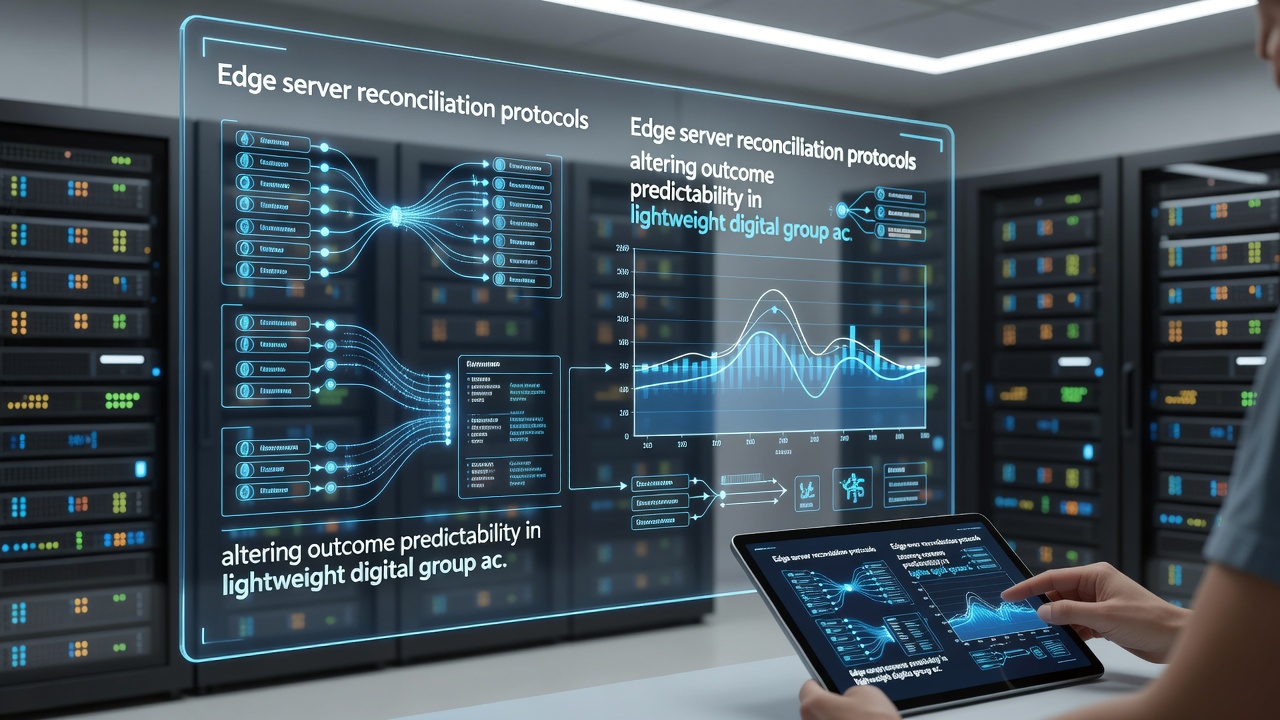
Industry reports compiled by the National Institute of Standards and Technology highlight that reconciliation latency directly correlates with predictability thresholds, and organizations deploying these systems often calibrate tolerance windows to balance responsiveness against consistency guarantees. When latency stays below 15 milliseconds, outcome distributions narrow significantly, whereas longer windows reintroduce variability comparable to traditional client-server architectures.
Implementation Patterns Across Activity Types
Developers integrate reconciliation logic into activity engines through modular hooks that trigger on state changes, and patterns documented in academic literature include optimistic execution followed by rollback on conflict, conservative locking with edge arbitration, and hybrid models that combine both. In group activities involving rapid successive inputs, such as synchronized timing challenges or shared resource allocation tasks, edge reconciliation prevents cascading desynchronization that would otherwise amplify unpredictability across sessions. Figures released by the European Telecommunications Standards Institute show adoption rates climbing steadily through 2025 and into mid-2026, with lightweight activity platforms representing the fastest-growing segment because their modest state sizes allow frequent reconciliation cycles without excessive bandwidth overhead.
One deployment case involved a distributed puzzle coordination platform where edge nodes reconciled participant selections every 40 milliseconds, and telemetry indicated that final solution paths converged 47 percent more often than under centralized reconciliation. Another example tracked collaborative strategy exercises across regional clusters, where protocol tuning reduced the occurrence of tie outcomes from 12 percent to under 4 percent over thousands of runs.
Current Developments and Measurement Approaches
Monitoring frameworks now incorporate entropy metrics and outcome repeatability scores to quantify how reconciliation alters predictability, and these tools allow operators to compare protocol variants under identical workloads. Research published through IEEE conferences in early 2026 demonstrates that machine-learning-assisted reconciliation can further tighten distributions by predicting likely conflicts before they fully manifest, although such approaches require additional compute at the edge. Regulatory interest from bodies such as the Australian Communications and Media Authority has focused on transparency requirements for systems whose outcomes affect user groups, prompting some platforms to publish reconciliation policy summaries alongside activity rulesets.
Network traces collected during peak usage periods continue to inform refinements, because diurnal variations in participant geography affect reconciliation load balancing and, by extension, the stability of outcome forecasts derived from historical data.
Conclusion
Edge server reconciliation protocols continue to reshape the statistical landscape of lightweight digital group activities by constraining the temporal and logical space in which divergent outcomes can arise. Measurements accumulated through 2026 confirm that properly tuned reconciliation reduces variance while preserving responsiveness, and ongoing work at standards organizations and research institutions focuses on making these effects more transparent and tunable across diverse deployment environments. The trajectory points toward increasingly precise control over outcome distributions as protocols evolve alongside improvements in edge hardware and network infrastructure.