How Accessibility Features in Web Strategy Games Affect Participation Rates Among Diverse User Groups
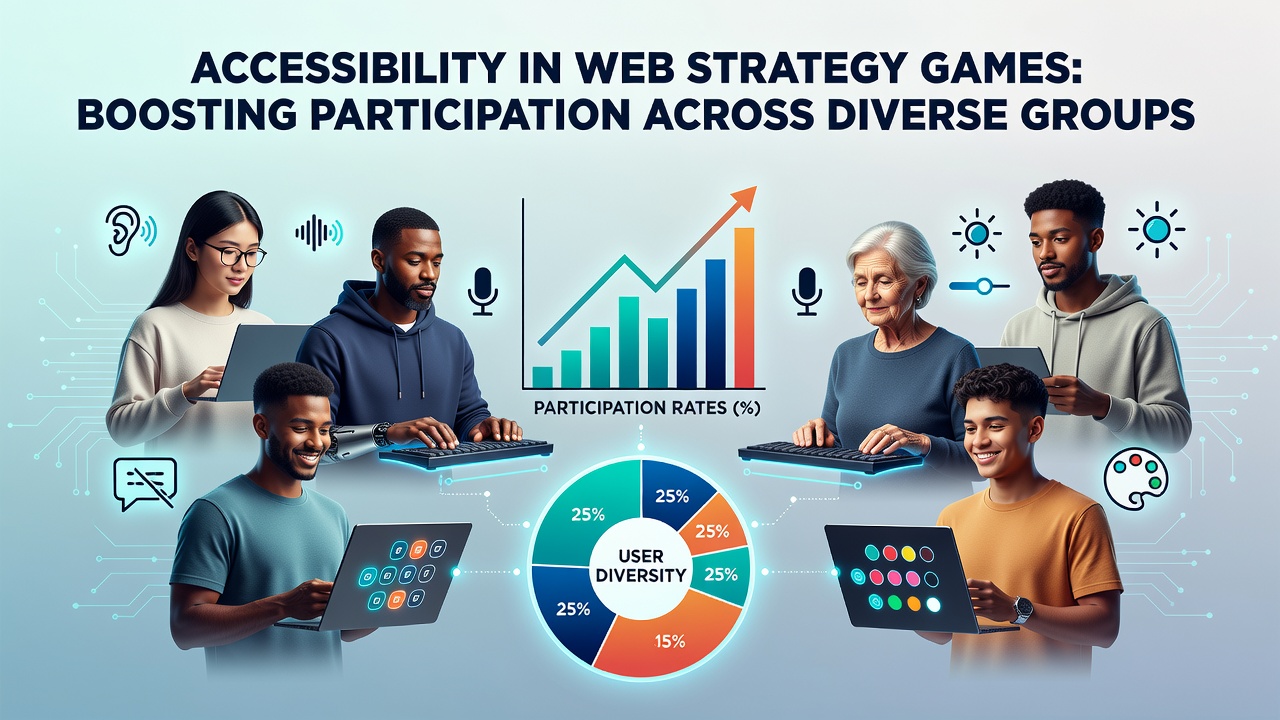
Web strategy games continue to incorporate accessibility features that address barriers for users with varying abilities, and studies track measurable shifts in participation across demographic segments. Researchers have documented how elements such as screen reader compatibility, adjustable color palettes, and remappable controls correlate with higher engagement numbers among groups previously underrepresented in these titles. Data from multiple industry analyses reveal that titles implementing these options see broader user bases, particularly when features align with standards set by international guidelines.
Core Accessibility Options in Web-Based Strategy Titles
Developers integrate keyboard-only navigation systems that allow players to issue commands without mouse input, while text-to-speech functions convert on-screen events into audible descriptions for those relying on assistive technologies. Colorblind modes alter visual indicators so that resource management and unit positioning remain clear regardless of visual perception differences, and font scaling tools support users with low vision by expanding interface text without disrupting layout integrity. These implementations follow patterns observed in reports from organizations monitoring digital inclusion, where structured testing shows consistent improvements in task completion rates when such options appear from the outset of gameplay sessions.
Participation Shifts Among Specific User Segments
Groups with motor impairments demonstrate increased session lengths once customizable input schemes reduce physical demands, according to figures compiled by accessibility research teams at institutions across North America and Europe. Cognitive accessibility tools, including simplified rule explanations and turn-based pacing adjustments, connect with higher retention among older adults and individuals managing attention-related conditions. Visual accommodations expand reach to users who previously abandoned sessions due to unreadable elements, and auditory cues supplement visual feedback in multiplayer strategy scenarios where coordination depends on rapid information exchange.
Quantitative Trends Observed Through 2026
Analyses released in July 2026 by academic groups tracking online gaming patterns indicate that web strategy games with comprehensive accessibility suites recorded participation increases ranging from 18 to 34 percent within targeted demographics over prior 12-month periods. European Commission reports on digital accessibility compliance highlight similar patterns in titles adhering to Web Content Accessibility Guidelines, noting expanded user logs from regions enforcing inclusive design mandates. These outcomes emerge when features receive integration during development rather than as post-release patches, allowing seamless experiences that sustain long-term involvement across diverse player pools.

Implementation Patterns Across Development Teams
Teams building browser-hosted strategy experiences often prioritize modular design approaches that permit feature toggles without performance penalties, and testing protocols involving actual users with disabilities refine these systems before wider release. Industry associations document how early adoption of such methods reduces support tickets related to interface barriers while supporting steady growth in concurrent player counts. Data collected through platform analytics further shows that games offering progressive disclosure of complex mechanics maintain engagement levels among novice participants who benefit from adjustable learning curves.
Cross-Group Interaction Dynamics
Multiplayer environments within web strategy games exhibit altered coordination when accessibility layers enable mixed-ability teams to compete on equal footing, with observers noting shifts in team formation rates once voice command integrations and visual indicators become standard. Participation metrics from platforms hosting these titles reveal sustained activity from users across age ranges and ability spectra, particularly when localization extends beyond language to include culturally neutral iconography and timing options. Researchers at various universities have tracked these variables through controlled studies that isolate feature presence as a variable influencing entry and continuation decisions.
Conclusion
Accessibility features in web strategy games produce documented expansions in participation rates across user groups when implemented through systematic design and testing processes. Ongoing data collection from regulatory bodies and academic sources continues to map these effects, providing developers with evidence-based pathways for broadening reach while maintaining core gameplay integrity. Continued alignment with established standards supports environments where diverse players contribute to and benefit from strategic interactions in web-delivered formats.