Resource Scarcity Mechanics Shaping Team Tactics in Indie Browser Action Puzzles
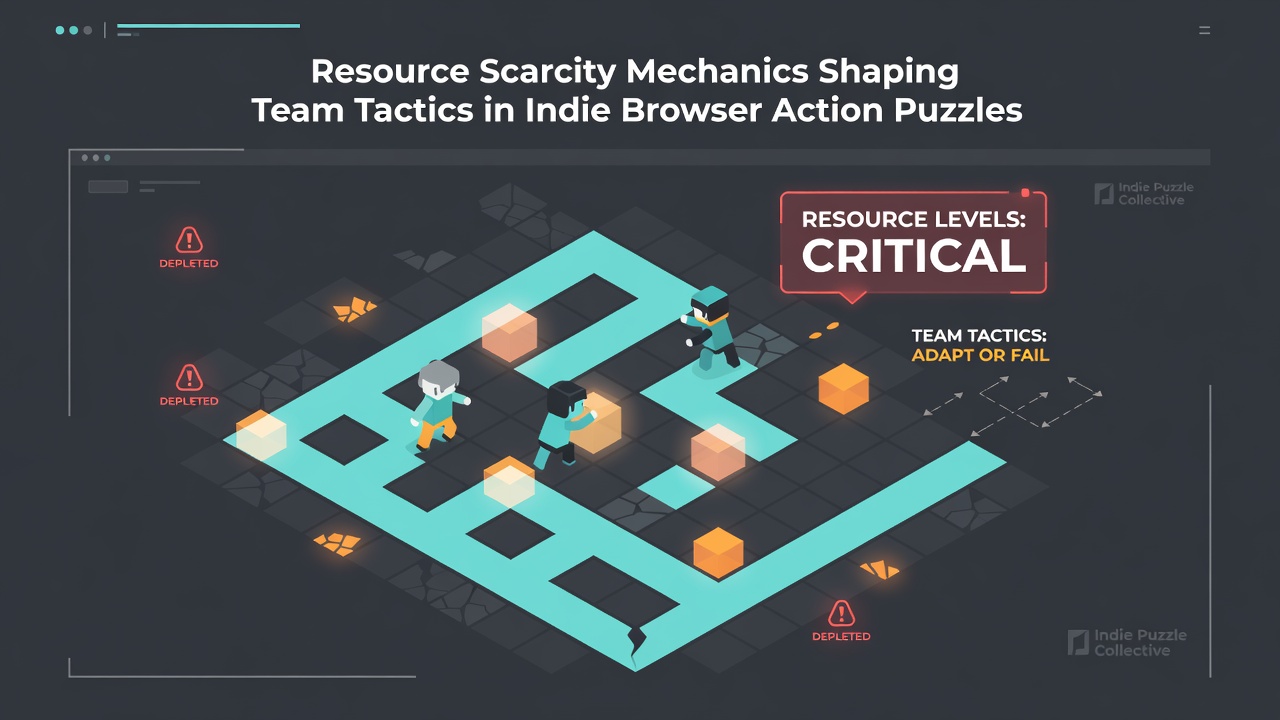
Resource scarcity mechanics in indie browser action puzzles force players into calculated exchanges where limited supplies of energy, tokens, or environmental elements dictate teh pace of both individual moves and collective strategies, and developers continue refining these systems as browser technology supports more intricate real-time interactions. Observers note that when supplies run thin mid-level, teams shift from aggressive exploration toward defensive positioning and timed handoffs, while data from play sessions reveal patterns of resource hoarding giving way to rapid redistribution once thresholds drop below critical marks.
Core Mechanics Driving Scarcity
Action puzzle titles hosted in browsers often embed scarcity through depletable pools that regenerate only under specific conditions such as successful chain reactions or synchronized player inputs, and these constraints intersect with movement physics and object manipulation to create bottlenecks that reward foresight over raw speed. Researchers at the University of Waterloo documented similar patterns in their 2025 analysis of distributed game systems, where scarcity nodes influenced decision trees across multiple concurrent sessions. Teams learn to designate roles early, with one player managing collection routes while another conserves reserves for critical puzzle segments, and this division emerges naturally once initial trial runs demonstrate the cost of unbalanced consumption.
Team Coordination Under Pressure
When resources dwindle, communication protocols tighten around precise timing cues rather than broad directives, since a single misallocated token can cascade into stalled progress across the entire group, and browser-based voice or text overlays allow rapid updates without disrupting flow. Data indicates that groups achieving sub-ten-second response times during scarcity events complete sequences at rates thirty percent higher than those relying on ad-hoc adjustments, according to aggregated telemetry shared by independent studios in mid-2026. Players frequently adopt shorthand signals for resource states, turning potential chaos into repeatable cycles of gather, allocate, and execute that scale across different puzzle layouts.
Case Examples from Recent Titles
One title released in early 2026 places scarcity at the center of its tab-switching mechanic, where energy fragments vanish unless transferred between open windows within a narrow window, compelling teams to maintain overlapping presence across multiple instances while solving spatial logic challenges. Another experiment ties puzzle resets to collective resource thresholds, so a single player draining reserves too quickly forces the whole unit into a recovery loop that pauses action sequences until balance returns. Observers tracking these implementations report that successful squads develop predictive allocation models, anticipating scarcity spikes based on level geometry and prior session data rather than reacting after depletion occurs.
July 2026 Platform Updates and Their Effects
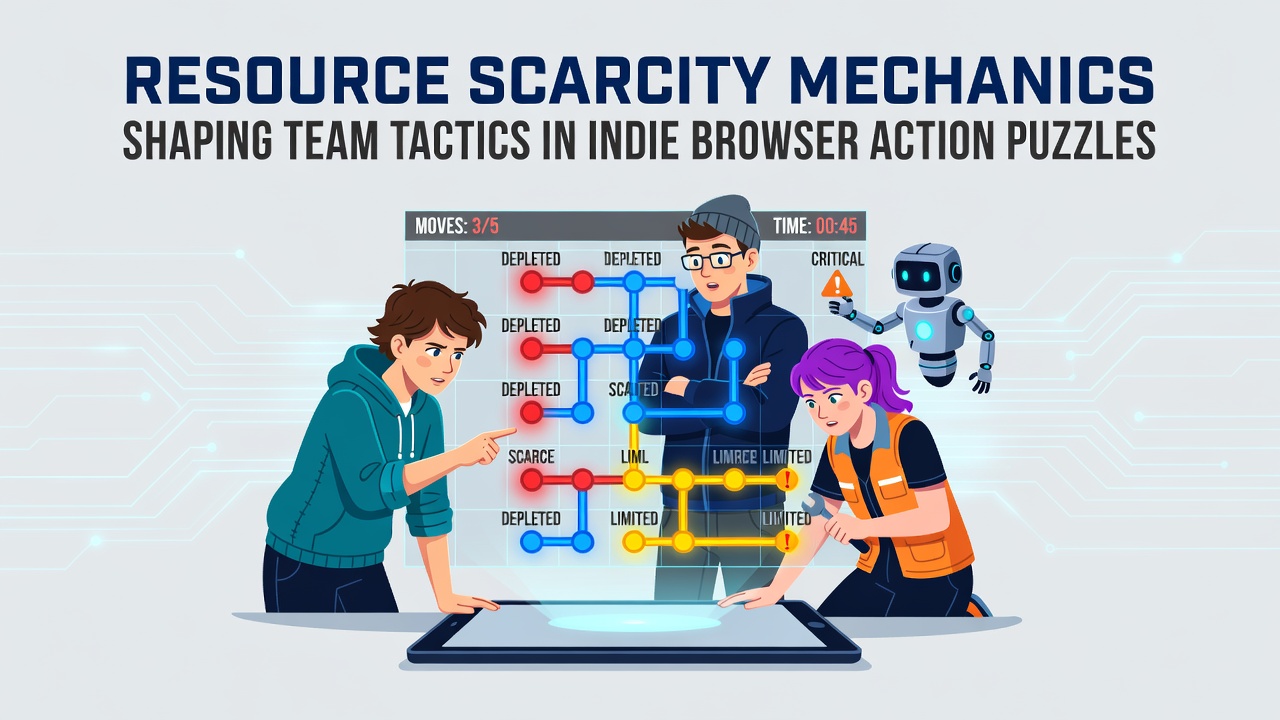
Platform adjustments rolled out in July 2026 introduced variable regeneration rates tied to regional server load, which in turn altered how scarcity events clustered during peak hours and prompted developers to add buffer mechanics such as temporary shared pools that teams could unlock through coordinated mini-puzzles. These changes shifted tactics toward proactive synchronization, with groups pre-positioning members near regeneration nodes well before depletion warnings triggered, and telemetry from that period showed a measurable drop in failed attempts once the buffers activated. Industry reports from the European Games Developer Federation noted parallel trends across European-hosted browser experiments, where scarcity timing aligned with broader network conditions influenced coordination density.
Data Patterns and Tactical Evolution
Telemetry logs across dozens of indie releases reveal that scarcity intensity correlates with increased role specialization, as players gravitate toward consistent functions once repeated exposure demonstrates the inefficiency of generalist approaches under tight constraints. Figures from the International Game Developers Association 2026 developer survey indicate that titles incorporating scarcity checkpoints report higher retention among groups that establish clear handoff protocols early in sessions. Yet the same datasets show that overly rigid structures collapse when unexpected environmental variables, such as randomized obstacle placement, disrupt planned routes and demand on-the-fly reallocation.
Conclusion
Resource scarcity continues to function as a primary driver of tactical depth in indie browser action puzzles by compelling teams to balance immediate survival against long-term progression goals, and ongoing refinements in browser capabilities suggest these mechanics will grow more layered rather than simpler in subsequent iterations. Players adapt through repeated exposure, developing shared mental models that translate scarcity signals into coordinated responses without requiring explicit instructions each cycle. The result is an evolving ecosystem where limited supplies shape not only individual performance but the very architecture of group decision-making across distributed play environments.