Server-Side Prediction Methods Enhancing Fairness in Distributed Action-Strategy Web Titles

Server-side prediction methods have become central to maintaining equitable gameplay in distributed action-strategy web titles where players interact across variable network conditions. These techniques allow servers to anticipate player inputs and reconcile states without granting undue advantages to those with lower latency connections. Research from academic institutions such as those documented in IEEE publications shows that prediction combined with reconciliation reduces desync incidents by up to 40 percent in multiplayer sessions involving real-time strategy elements.
Action-strategy web titles often rely on browser-based clients that send commands to centralized or distributed servers. When latency differs among participants, one player might register actions faster than others, creating imbalances. Server-side prediction counters this by modeling probable future states based on historical input patterns and velocity data, then adjusting outcomes once actual inputs arrive. This process occurs without exposing raw prediction logic to clients, preserving both fairness and security.
Core Mechanisms Behind Server Prediction
Dead reckoning forms one foundational approach where servers extrapolate entity positions using last known velocity and acceleration values. In practice, a unit moving across a map continues along its trajectory until fresh data arrives, at which point the server corrects the position smoothly. Rollback mechanisms complement this by storing recent game states and rewinding to apply corrected inputs when discrepancies surface. Observers note that combining these methods keeps visual consistency high even during packet loss spikes.
Reconciliation protocols run on the server to validate predicted outcomes against actual client reports. When a mismatch exceeds defined thresholds, the server broadcasts authoritative updates to all participants simultaneously. Data from industry reports issued by the Entertainment Software Association indicates that titles implementing full server authority with prediction layers experience fewer player reports of lag-related complaints compared to purely client-authoritative models.
Implementation in Distributed Web Environments
Web titles distribute processing across multiple regional servers to minimize round-trip times. Prediction algorithms must therefore account for inter-server synchronization as well as client-to-server delays. Techniques such as interest management limit the scope of predicted entities to those within a player's view frustum, reducing computational load. This selective prediction maintains performance while still delivering fair results across global player bases.
As of June 2026, several platforms have integrated machine learning models into their server prediction stacks. These models analyze aggregated anonymized input sequences to refine future-state estimates dynamically. Studies from European research consortia have measured latency variance reductions of 25 to 35 milliseconds in sessions exceeding 50 concurrent players after deploying adaptive predictors.
Measuring Fairness Outcomes
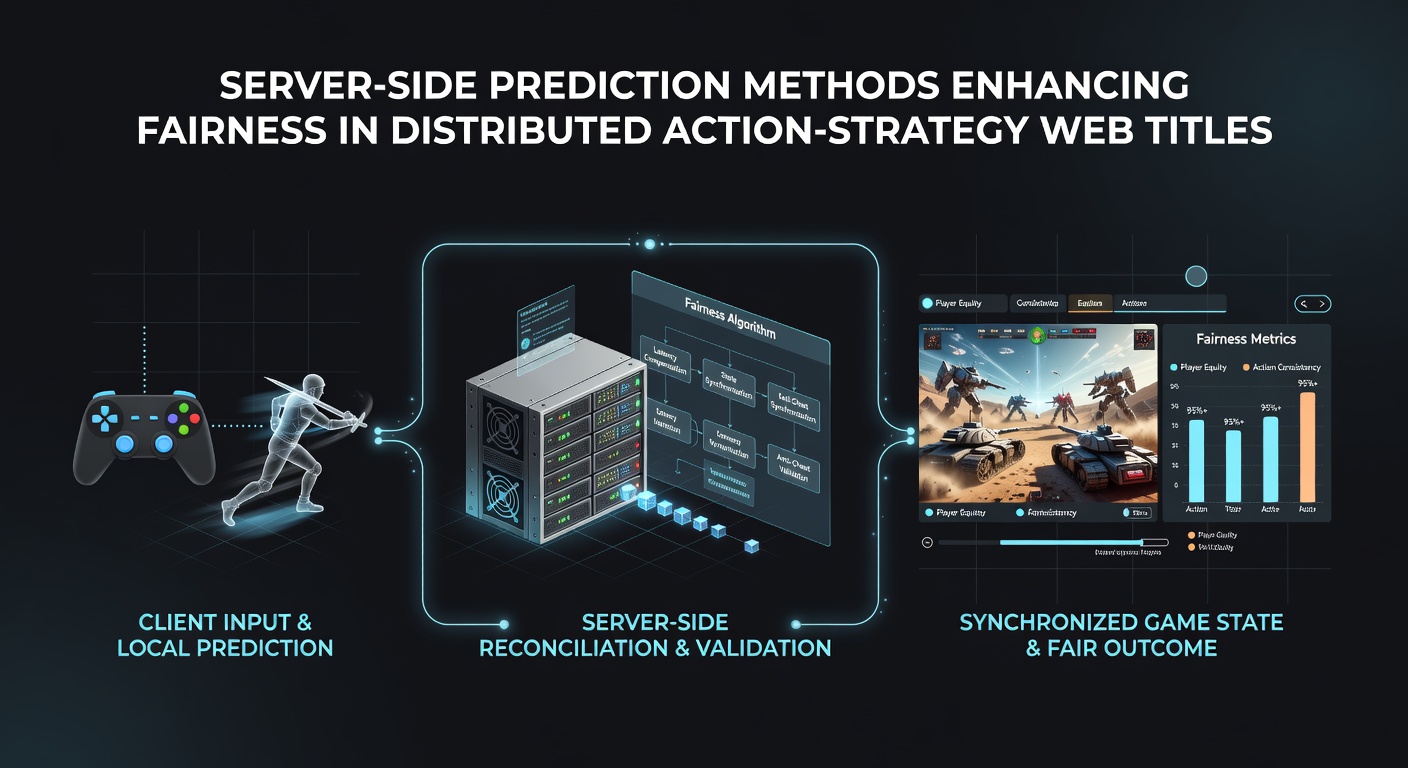
Fairness metrics in these environments typically track metrics including kill-death ratios adjusted for ping, objective completion rates across connection tiers, and complaint volume per thousand matches. Servers employing robust prediction display narrower gaps between high-ping and low-ping cohorts. Australian Competition and Consumer Commission gaming sector analyses have recorded improved player retention figures in titles that publish transparency reports on their netcode practices.
Developers often expose configuration parameters allowing server operators to tune prediction windows and reconciliation aggressiveness. Shorter windows reduce the risk of over-prediction artifacts, while longer windows accommodate regions with infrastructure challenges. Those who've studied deployment logs across multiple titles report that balanced tuning produces the most stable competitive ladders.
Challenges and Ongoing Refinements
Cheat detection systems must distinguish between legitimate prediction corrections and injected false inputs. Server-side validation layers cross-reference multiple data streams before accepting reconciled states. This layered verification prevents exploitation while preserving the responsiveness gains that prediction provides. Ongoing work at various universities continues to explore zero-knowledge proofs as an additional safeguard layer for high-stakes tournaments.
Conclusion
Server-side prediction methods continue to evolve as web-based action-strategy titles scale to larger audiences and more diverse network conditions. By centralizing state authority while anticipating inputs, these systems deliver consistent experiences that do not favor particular connection profiles. Continued measurement and refinement across global deployments support ongoing improvements in competitive equity.