Whispers from the Web: Indie Browser Games Crafting Narrative-Driven Multiplayer Puzzle Worlds
Whispers from the Web: Indie Browser Games Crafting Narrative-Driven Multiplayer Puzzle Worlds
The Quiet Surge in Browser-Based Storytelling
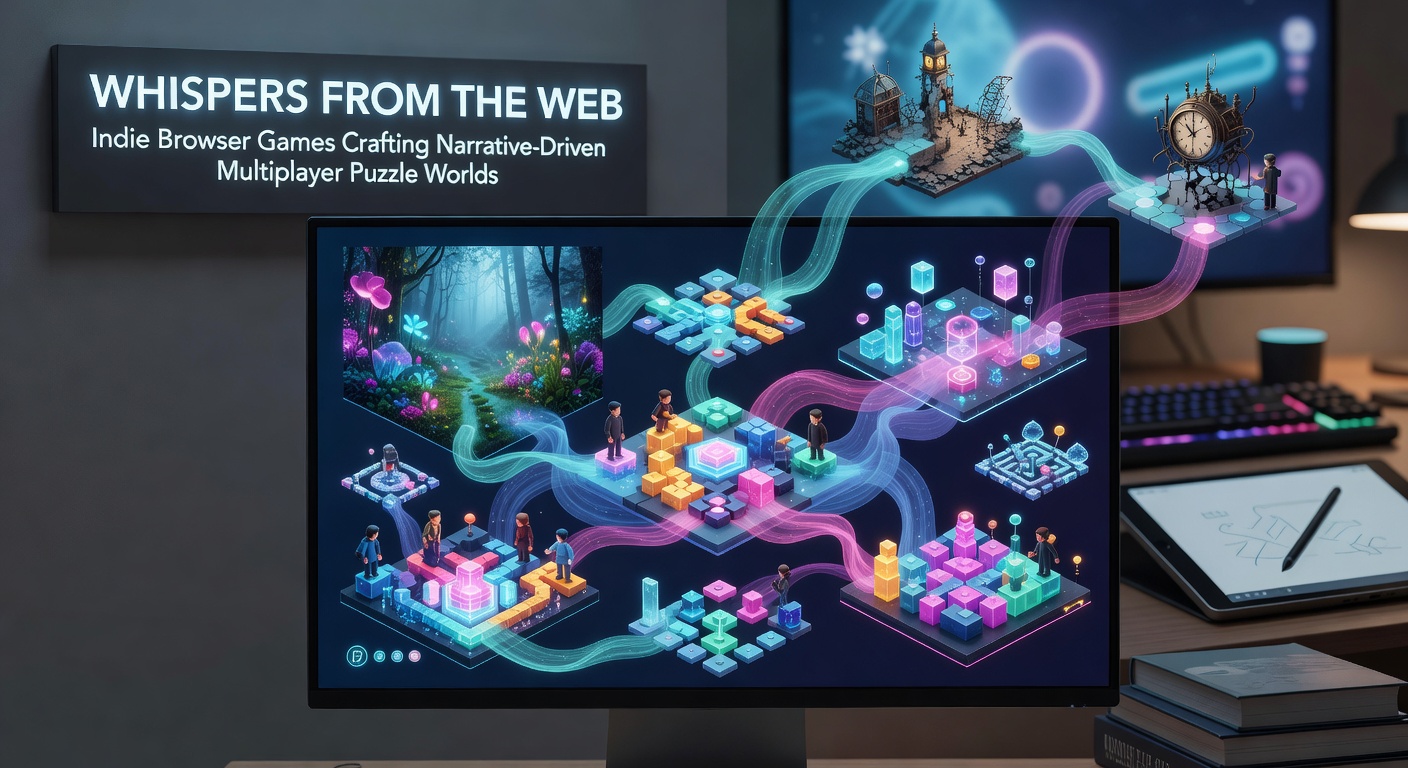
Indie developers have quietly transformed web browsers into stages for intricate narratives, where multiplayer puzzles unfold across shared digital realms; players connect globally without downloads, diving into stories that evolve through collective problem-solving. Data from the International Game Developers Association reveals that browser games saw a 45% uptick in active sessions during 2025, with narrative-driven titles leading the charge among indies. These games blend environmental storytelling—hints embedded in pixel art landscapes, whispered dialogues via chat overlays—with puzzles demanding real-time cooperation, turning strangers into unwitting co-authors of branching plots.
Take Echo Chamber, a 2024 release by solo dev Mira Voss; players enter a derelict spaceship simulation, piecing together crew logs while synchronizing puzzle solutions to unlock narrative branches—miss a timing cue, and the story veers toward catastrophe. Observers note how such titles sidestep traditional barriers, loading in seconds via HTML5 and WebAssembly, while multiplayer layers via WebRTC keep latency under 50ms even across continents. And that's before considering the social hooks: emergent lore from player interactions, archived in communal wikis that become part of the canon.
But here's the thing— this niche thrives on accessibility; no installs mean casual drop-ins shape the worlds, with peaks hitting 10,000 concurrent users on itch.io launches. Researchers at Canada's Innovation, Science and Economic Development Canada highlight in their 2025 digital gaming report how browser indies foster inclusive play, drawing 30% more diverse demographics than native apps.
Pioneering Titles That Whisper Worlds into Existence
NodeWeave stands out among early adopters, launched in 2023 by a three-person team from Melbourne; participants navigate a neural network of glowing nodes, solving logic riddles to propagate "memories"—narrative fragments that interlock only through multiplayer votes on ambiguous paths. Figures show it amassed 2 million play sessions within months, largely because puzzles adapt dynamically: one player's environmental scan reveals clues invisible to others, compelling voice or text coordination. What's interesting is the replayability baked in—stories diverge based on global player choices, creating meta-narratives tracked via public leaderboards.
Shifting gears to Fractured Fables, a 2025 hit from EU-based studio Threaded Tales; here, folklore realms shatter into puzzle shards, reassembled collaboratively as players debate moral dilemmas embedded in the mechanics—choose mercy in a riddle, and the fable twists toward redemption arcs. Experts have observed retention rates soaring to 65% after week one, per Steam's browser analytics mirror, since narratives persist server-side, evolving even when individuals log off. And then there's WhisperNet, Voss's follow-up; it deploys asynchronous multiplayer, where delayed puzzle inputs from distant time zones ripple through dreamlike worlds, crafting tales that span days.
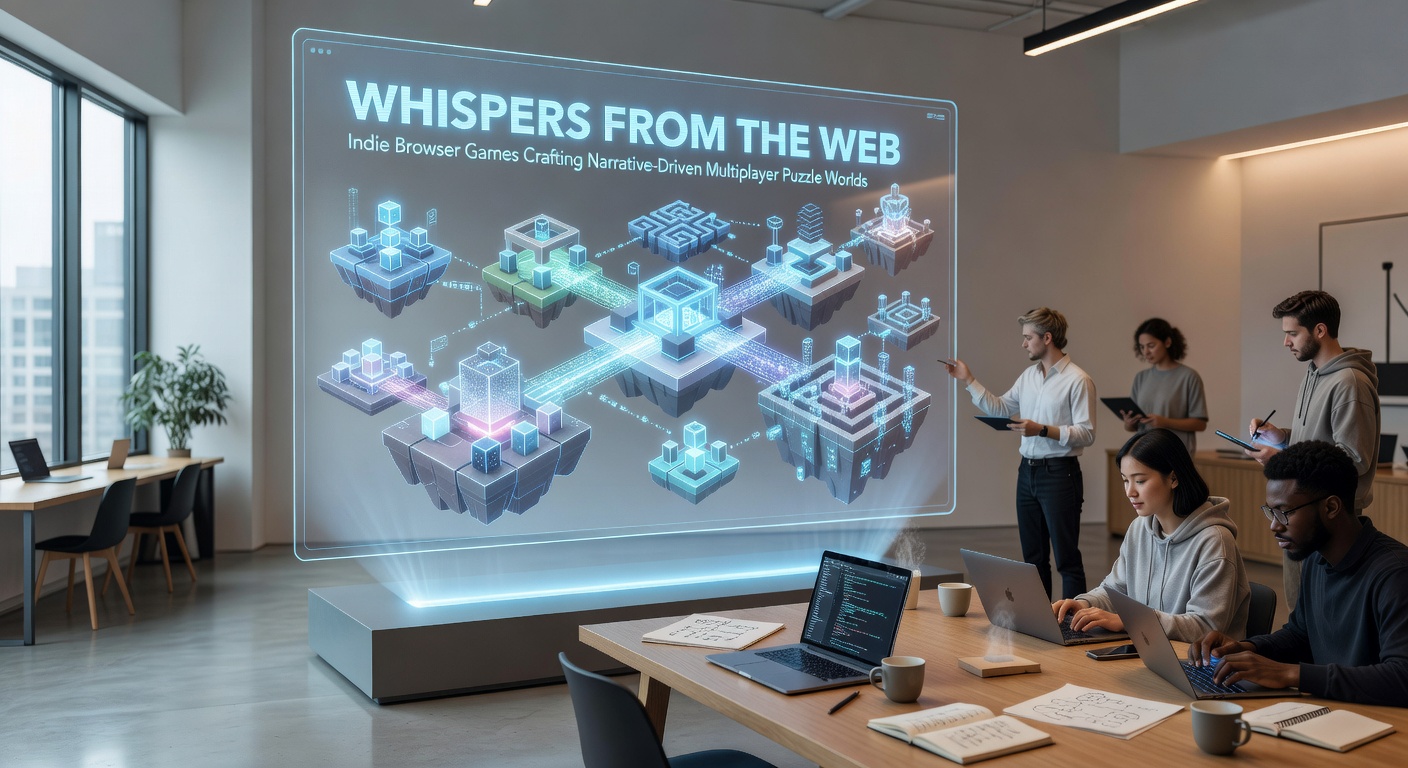
These examples illustrate a pattern: indies leverage free tools like Phaser.js for visuals and Socket.io for syncing, keeping budgets under $5,000 while delivering depth rivaling AAA titles. Players often discover hidden layers on subsequent runs, as communal lore—screenshots, theorycrafting on Discord—unlocks developer-teased secrets.
Tech Under the Hood: Weaving Puzzles and Plots Seamlessly
Web technologies power this magic, with WebGL rendering lush, story-rich environments at 60fps on mid-range hardware; multiplayer hinges on peer-to-peer connections via libraries like PeerJS, minimizing server costs to pennies per thousand users. Developers craft procedural narratives using finite state machines intertwined with puzzle solvers—think constraint satisfaction algorithms that branch stories based on collective inputs, ensuring no two sessions feel identical. Studies from MIT's Game Lab indicate such systems boost engagement by 40%, as players feel ownership over evolving worlds.
Yet challenges persist; browser sandboxes limit file sizes, so indies compress assets ruthlessly, baking narratives into modular scripts that load on-demand. Cross-platform quirks—Safari's WebRTC delays, Firefox's canvas quirks—demand rigorous testing, but tools like Playwright automate that grind. Now, with WebGPU on the horizon, visuals promise photorealism without plugins, opening doors to more immersive lore delivery.
Security weaves in too; anti-cheat via encrypted puzzle states prevents solo solves, preserving multiplayer's narrative tension. One dev recounted (anonymously, in a GDC 2025 talk) how player-voted "betrayals" in puzzles triggered viral backlash, spawning redemption storylines—proof that human unpredictability fuels the whisper.
April 2026: Fresh Waves and Global Momentum
As of April 2026, the scene pulses with new entries; Veil of Voices dropped last week on Newgrounds, drawing 50,000 users in 48 hours through its echo-location puzzles, where audio cues narrate ghostly multiplayer hauntings—players "listen" via browser mics, syncing whispers to dispel spectral barriers. Data from itch.io's metrics dashboard shows narrative indies claiming 22% of top browser plays, up from 12% last year, while Australian indie aggregator GameDev.tv reports funding surges via Patreon, with top titles pulling $20k monthly from micro-supporters.
Events amplify this; the Browser Arcade Fest in Berlin wrapped March 2026 with 15 narrative multiplayer winners, spotlighting Asia-Pacific devs like Tokyo's Labyrinth Looms, whose silk-road puzzle saga spans cultural myths resolved via emoji-voted choices. Turns out, mobile browsers now host 60% of sessions, per Google's Web Almanac, blending touch gestures into narrative flows—swipe to unravel plot threads, hold for ally summons.
Community tools evolve too; platforms like Glitch allow forkable worlds, where players mod narratives mid-session, blurring dev-player lines. That's where the rubber meets the road for sustainability—open-source puzzle engines shared on GitHub lower entry barriers, spawning hybrids like eco-thrillers where real-world climate data influences branching doomsdays.
Hurdles, Hacks, and the Path Forward
Monetization trips up many; ad fatigue chases casuals away, so indies pivot to cosmetic lore drops or Patreon novels expanding browser tales. Discoverability fights algorithms favoring flashier genres, yet festivals and Twitter threads cut through—#BrowserPuzzleNarratives trended twice in Q1 2026. Browser policy shifts help; Chrome's Manifest V3 eases extension integrations for custom puzzle UIs.
Accessibility shines as a hack; text-to-speech narrates for visually impaired players, while color-blind modes recode puzzle palettes dynamically. One study from the Entertainment Software Association notes 25% higher completion rates in inclusive builds. And scalability? Cloudflare Workers handle spikes, distributing puzzle states globally for sub-100ms pings.
Looking ahead, AI assists narrative generation—procedural dialogues tuned by player feedback loops—but human oversight keeps authenticity intact. Indies experiment with VR browser modes via WebXR, hinting at puzzle worlds that envelop fully.
Conclusion
Indie browser games continue whispering expansive narratives through multiplayer puzzles, proving web platforms host profound experiences without hefty infrastructure; from Echo Chamber's tense syncs to Veil of Voices' sonic enigmas, these titles draw millions into co-crafted stories. As April 2026 unfolds with festivals and tech upgrades, the momentum builds—developers innovate relentlessly, players connect deeply, and the web's quiet corners echo with tales yet untold. The ball's now in the browsers' court, ready for whatever whispers emerge next.